
Commercial Painting In Lawrenceville
Beautifying residential and commercial establishments since 1984
Signs a Lawrenceville Commercial Building Needs Repainting
Fading, chalking, peeling, water stains, and worn safety striping are the common red flags. Downtown brick storefronts and newer stucco buildings on Sugarloaf Parkway show wear differently, so what you look for depends on how the building is built.
Georgia’s humid summers and freeze-thaw winters put constant stress on exterior coatings, but the building type matters as much as the weather. Downtown’s historic brick and wood-frame storefronts tend to show mortar staining, peeling trim, and wood rot around windows long before the main facade looks bad. Newer stucco and EIFS buildings age the other way around, chalking and cracking first as synthetic finishes react to UV.
- Fading or uneven color, worst on south- and west-facing walls
- Chalking — a powdery residue that rubs off on your hand, common on stucco and EIFS
- Peeling or blistering around wood trim, soffits, and window frames
- Water stains or dark streaks below rooflines, gutters, and sills
- Cracking in stucco that lets water behind the finish
- Faded ADA parking symbols, curb markings, and fire lane striping
- Rust bleed on metal doors, railings, or steel lintels
One sign on its own may not mean trouble. Two or more together usually means the coating has reached the end of its service life. Wait too long and moisture reaches the substrate, turning a repaint into wood replacement, stucco patching, or masonry sealing. A quick walk around the property each quarter catches most of this while a straightforward repaint is still the right fix.
How Commercial Painting Pricing Works
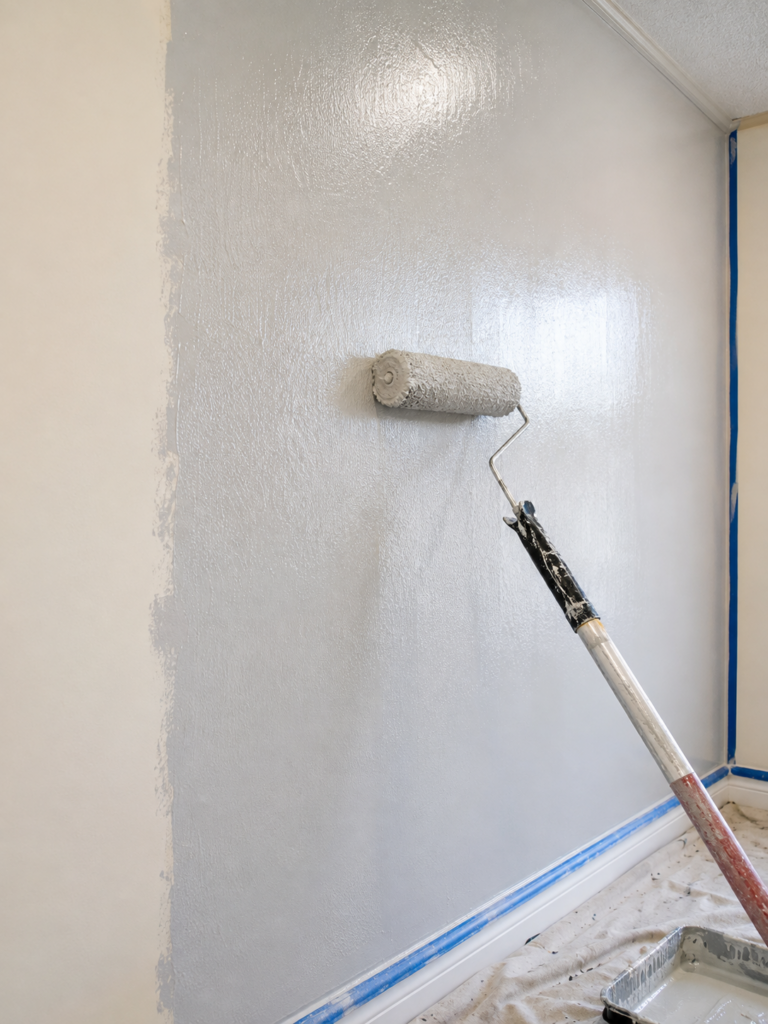
Commercial painting rarely comes from a flat rate card. Most contractors, us included, price after walking and measuring the space. Square footage matters, but so does what is already on the walls: a warehouse with block walls prices differently from an office suite with drywall and trim, and a divided floor plan takes longer than a single open bay.
Surface condition drives cost more than almost anything else. Buildings that look fine from the parking lot often have peeling paint, drywall cracks, or years of grease film near a loading dock. That prep has to happen before a brush touches the wall, and it is usually where the time goes.
- Square footage and ceiling height
- Prep needed, including patching, pressure washing, and sanding
- Number of coats and paint type
- Whether the space stays occupied, and how that affects scheduling
- Access issues such as lifts for high bays or tight loading areas
Before you hire anyone, ask how they estimate prep and paint labor separately, what product line they are quoting, and whether the price includes moving furniture, protecting flooring, or working after hours. Get it in writing. It is the fastest way to compare bids fairly instead of comparing bottom lines.
When You Don't Need a Full Repaint
Not every building needs a full repaint. Paint can look tired while the surface underneath is still solid, and if there is no cracking, peeling, or water staining, touch-ups in high-traffic spots may be all you need. Storefronts around Gwinnett County often take more abuse from foot traffic and delivery carts than from actual paint failure.
- Dirty or faded exterior with a smooth, non-chalking surface — pressure washing may solve it
- One office or suite needs a refresh while the rest looks fine — spot painting works
- Ceiling stains from a leak that has already been fixed — that is a ceiling job
- Small drywall dings or nail holes in a break room — patch and blend
- Dated cabinet finish in a break room or reception area — cabinet painting handles it
A short walk-through tells us whether we are dealing with one section, one surface, or the whole building. If the paint is failing in isolated spots and holding everywhere else, we will say so.
Painting Occupied Buildings Without Shutting Down
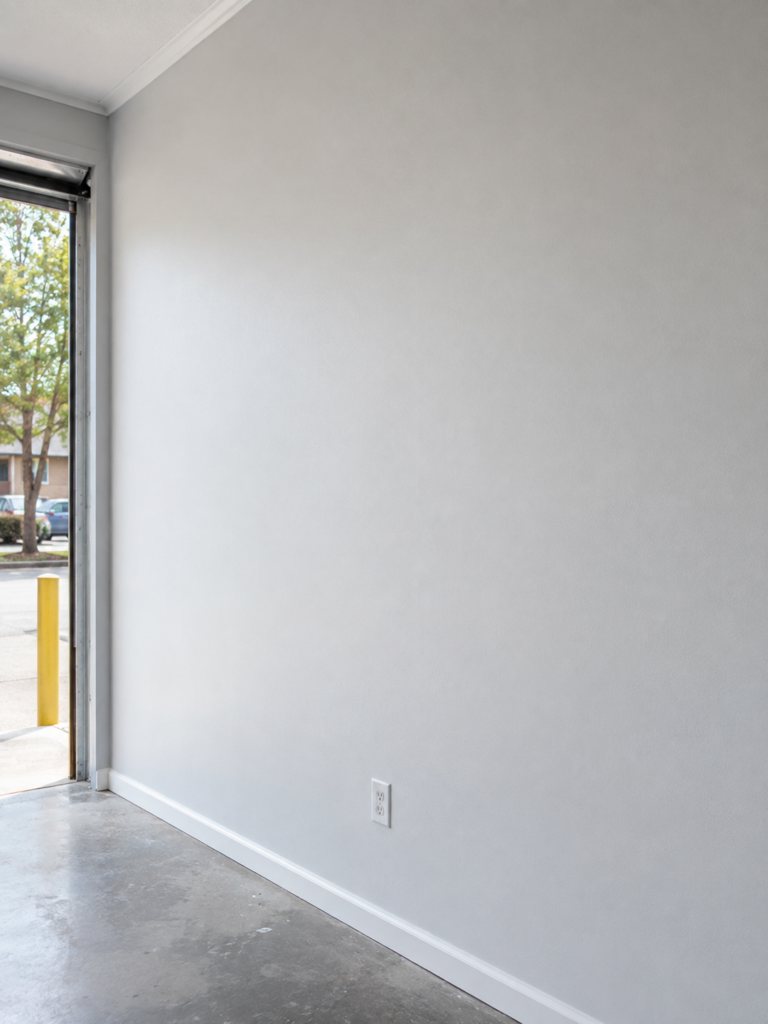
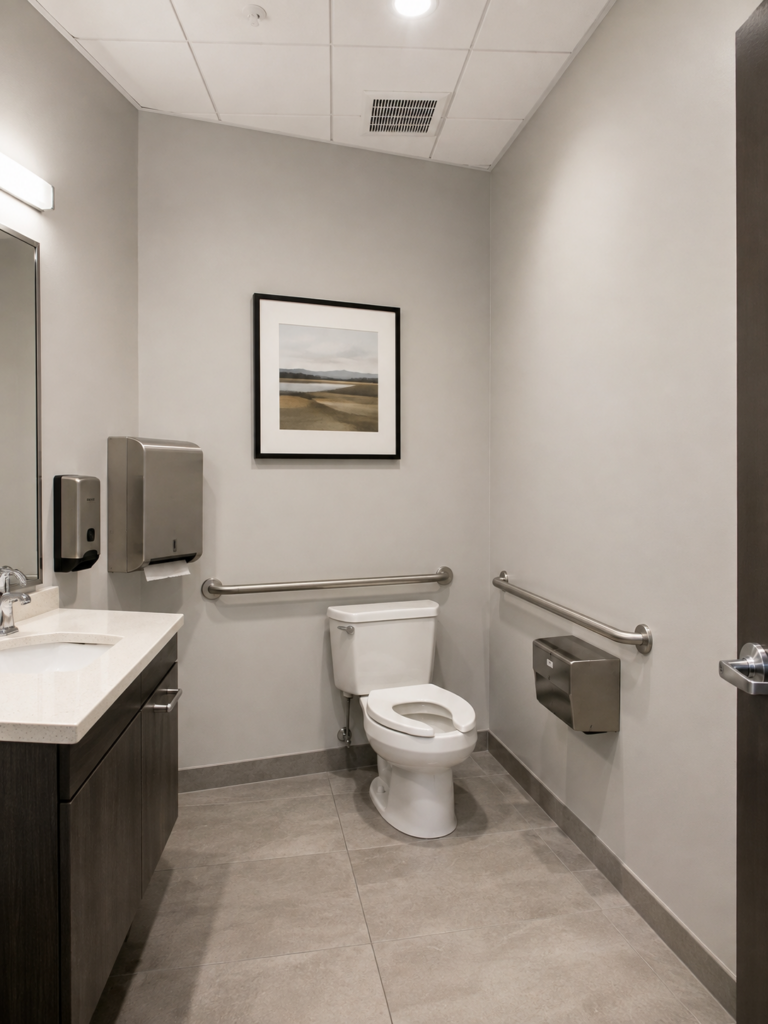
The multi-tenant retail strips, medical plazas, and office parks along Sugarloaf Parkway and Highway 120 rarely have a slow season. A crew cannot rope off a parking lot and take over a building for a week while neighboring businesses still need customers walking in and deliveries arriving. Commercial painting here means working around the building’s real schedule. Phasing is the core strategy. Instead of painting a retail strip all at once, we divide the project into sections and finish one storefront or wing before moving to the next, so part of the property stays fully operational. Signage directs customers to open entrances, and tenants get notice about the days that affect their unit.
- Sequencing exterior work storefront by storefront so only one or two units are affected in a day
- Scheduling loud prep like pressure washing and scraping during off-peak hours
- Running interior office painting overnight or on weekends when desks are empty
- Coordinating with property management to stagger crews across a building’s wings
- Using low-VOC and odor-controlled coatings near restaurants, medical offices, and daycare tenants
For restaurants and medical suites, that timing is not optional. A strong paint smell around food service or patient areas is a liability, so odor-controlled products and extra air movement are standard practice rather than an upsell. Rooms ventilate overnight and the crew clears out before staff arrive. Protecting what is already in the space matters as much as the paint. Display fixtures, merchandise racks, medical equipment, and office furniture get covered, moved, or shielded before a roller touches a wall, and floors near active walkways are masked and taped. On active retail strips, ladders and materials are secured each night so nothing is left outside during business hours.
Surface Prep and Coatings for High-Traffic Commercial Spaces
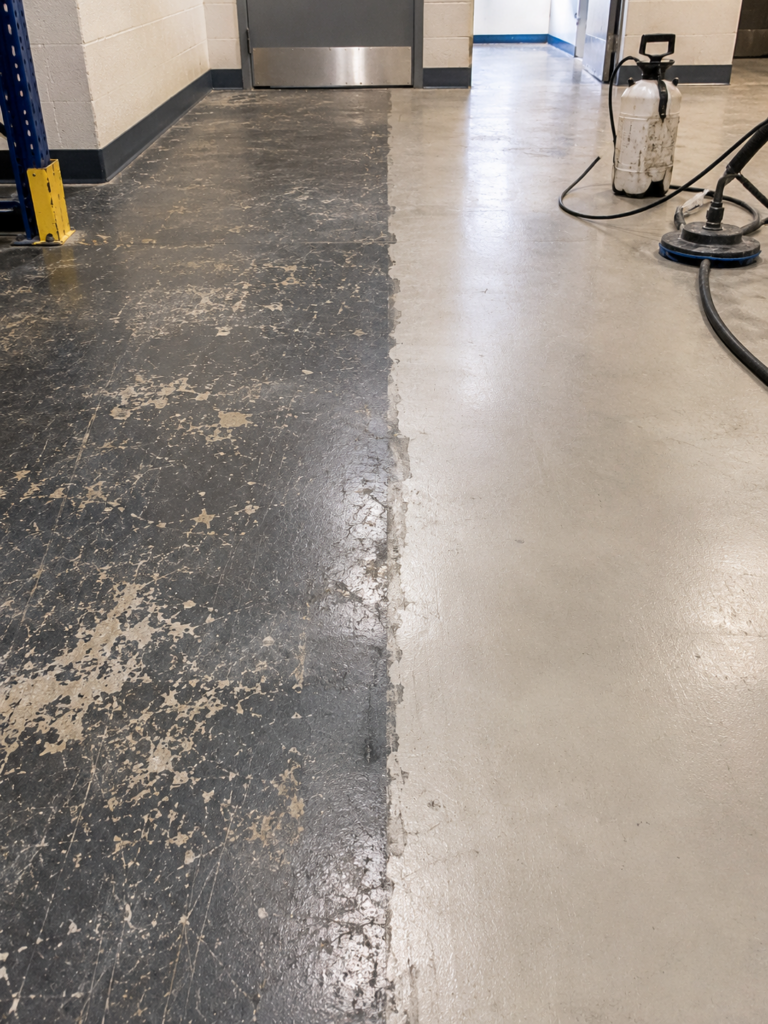
A commercial paint job is only as good as the surface underneath it. Walls, floors, and facades get cleaned first to remove grease, dust, mildew, and grime, which in food service and industrial spaces usually means degreasing agents and pressure washing. Skipping this is a common reason commercial paint fails early where foot traffic or equipment contact is constant.
Once surfaces are clean, we patch drywall dings, nail holes, cracked stucco, and worn baseboards so the finish coat does not highlight old wear, then sand for an even profile. Rust spots and scuff marks on metal doors, railings, and structural elements get treated before priming. A quality primer seals the substrate, blocks stains, and gives the topcoat a uniform surface to bond to.
Product selection matters just as much, and we choose coatings based on how the space is used rather than how it looks on day one.
- Epoxy or urethane-modified coatings for warehouse floors and loading areas
- Scuff-resistant, washable acrylics for hallways, stairwells, and retail spaces
- Anti-microbial coatings for restrooms, break rooms, and healthcare-adjacent facilities
- Rust-inhibiting industrial enamels for metal doors, railings, and exterior structural elements
- Low-VOC formulations for occupied offices where air quality and downtime matter
Timing plays a bigger role than most property owners expect. Summer humidity extends drying and curing times, and coatings that stay tacky longer are more likely to catch dust and debris. Spring and fall bring more predictable conditions for exterior work, so we plan the schedule around the season instead of pushing through it.
Frequently Asked Questions
Look for two or more warning signs together, such as fading, chalking, or water stains. Downtown brick storefronts often show peeling trim and wood rot near windows first, while newer stucco buildings chalk and crack before anything else. One sign alone may not mean trouble.
Yes. We schedule work in sections rather than shutting down the whole building, and we can work early mornings, evenings, or weekends depending on your traffic patterns. Parking areas and entrances stay clear for employees and customers throughout the project.
Pricing depends on square footage, ceiling height, and how much prep the walls need. Access issues such as lifts for high bays, and whether the space stays occupied, also affect the estimate. Ask any contractor to separate prep from paint labor in writing so you can compare bids fairly.
We start with a walk-through to confirm surface conditions match what we found at the estimate, checking for peeling paint, drywall cracks, or grease film that does not show from the parking lot. Prep happens before any paint goes on, and we protect flooring and move furniture as needed.
Yes. Humid summers and freeze-thaw winters put steady stress on exterior coatings, and south- and west-facing walls fade fastest. Stucco and EIFS buildings often chalk and crack from UV exposure before older brick buildings show similar wear.
Not always. If the surface is smooth with no cracking or peeling, spot painting or pressure washing often solves it. A quick walk-through tells us whether the issue is isolated or spread across the building, so you only pay for the work you need.