
Fence Painting & Staining in Lawrenceville
That Stands Up to Georgia Humidity Beautifying residential and commercial establishments since 1984
- In business since 1984
- 4.6 rating across Google reviews
- Premium brands — Sherwin Williams, PPG, Benjamin Moore, Glidden
- Free estimates
Spotting the Warning Signs of a Failing Paint Job
Cracking, peeling, and chalky residue usually point to a prep problem, not just old paint. Georgia’s humid summers and freeze-thaw winters push a bad paint job to fail in two or three years instead of seven or eight.
Look at your exterior trim first. Paint lifting in thin curls near windowsills or door frames usually means moisture is getting underneath the film — common on Lawrenceville homes built in the ’80s and ’90s, where original wood trim has swelled and shrunk for decades.
Chalking is the other signal. Rub your hand across an exterior wall; a powdery film on your palm means UV exposure is breaking the paint down. It shows up first on south-facing walls that catch full sun most of the day.
- Cracking or alligator-pattern paint, often on older siding or trim
- Peeling near gutters, downspouts, or roof lines where water runs
- Bubbling on interior walls near bathrooms or laundry rooms
- Fading that is uneven, patchy, or worse on one side of the house
- Chalky residue that transfers to your hand or clothes
Inside, watch for bubbling paint on bathroom ceilings and hairline cracks above door frames. Moisture or minor settling is usually behind them, and neither fixes itself. When several signs show up together, it is time to stop patching and plan a proper paint job.

Signs Your Fence Needs Painting or Staining
Graying wood, peeling paint, and water that soaks in instead of beading up are the clearest signs your fence needs attention. Catching these early saves the wood underneath and keeps a small refresh from turning into a full board replacement. Take a walk along your fence line. Really look at it. Most folks don’t notice their fence needs help until it’s staring them in the face at a cookout. Wood fences here in Lawrenceville take a beating from our humid summers. The wood swells and shrinks with every heavy rain. That constant movement cracks old paint and stain first. We see this every week; a customer calls thinking they need a whole new fence when a proper repaint would’ve done the job two years ago.
- Wood has turned gray or silvery instead of its natural color
- Paint or stain is peeling, flaking, or bubbling off in chunks
- Water soaks straight into the wood instead of beading on top
- Dark or greenish spots that look like mildew or mold
- Nail heads or hardware showing rust streaks down the boards
- Boards feel soft, spongy, or slightly warped when you press on them
That water test tells you almost everything. Splash a cup on a board. If it soaks in within a minute, your old finish has given up on protecting the wood. Not sure which of these apply to your fence? That’s common, most people spot one or two signs and assume the rest are fine. Soft or spongy boards are a different story. That’s usually rot, not a paint problem. No amount of Sherwin Williams or Benjamin Moore product will fix wood that’s already breaking down underneath.
Paint or Stain: Matching the Finish to Fence and Weather
Paint and stain do two different jobs. Picking the wrong one means redoing the fence sooner than you’d like. Lawrenceville swings from muggy summers to cold snaps in January. That swing is why the choice matters here.
Stain soaks into the wood grain instead of sitting on top. On cedar and pressure treated pine, the two woods we see most on fences around Gwinnett County, stain lets the wood expand and contract without peeling. Paint sits on the surface and forms a harder shell. That shell looks great and hides old repairs. It can trap moisture if the wood isn’t fully dry before we apply it.
- Full sun exposure: west facing fences fade faster and may do better with a UV resistant stain
- Older or repaired fence sections often need paint to blend patched boards
- Fences near sprinklers or low spots need extra dry time before any coat goes on
- Chain link and vinyl sections need different prep than wood. Not every fence type takes stain well.
We get asked constantly, can’t we just paint over old stain? Sometimes. It depends how far the old finish has broken down. We check that on site before quoting anything.
The prep work behind fence staining and painting isn’t all that different from what we do on siding and trim. You can see how we approach surface prep and product selection on our main service page.


When Your Fence Can Skip a Full Refinish
Not every fence needs a full strip and refinish. We say this even though it costs us work sometimes. If your fence is less than two years old and the wood still looks tight, you might just need a light clean. Pressure washing alone can pull years of grime, pollen, and mildew off cedar and pine boards without touching a drop of paint. Around Lawrenceville, that pollen season each spring is brutal on light-colored stain. A good wash handles it.
- Color still looks even with no major fading or blotching
- Wood feels solid when you press on it, no soft or spongy spots
- Only one or two boards show wear, not the whole fence
- Stain is peeling in small flakes rather than sheets
- The fence is under three years old with the original finish
See gray, weathered wood that’s soaking up water instead of shedding it? That’s different. So is stain that’s cracking and lifting in big pieces. Those are signs the wood is unprotected. Waiting just lets moisture get deeper into the grain. If you’re only dealing with a couple of damaged boards, sometimes spot repair and a partial re-stain gets you another year or two before a full job makes sense. Not sure which one you’ve got? Snap a photo and give us a call. We’ll tell you straight if it’s a wash job or a repaint. Not sure what your Fence Painting & Staining project needs?
Fence Prep and Finishing Steps in Lawrenceville
Here’s the truth. Most fence jobs fail because of what happens before the brush ever touches wood. Skip the prep, and you’re just hiding problems under a fresh coat for a season or two. We’ve pulled paint off fences in Lawrenceville that looked fine on top but had rot underneath. Nobody bothered to check that wood first.
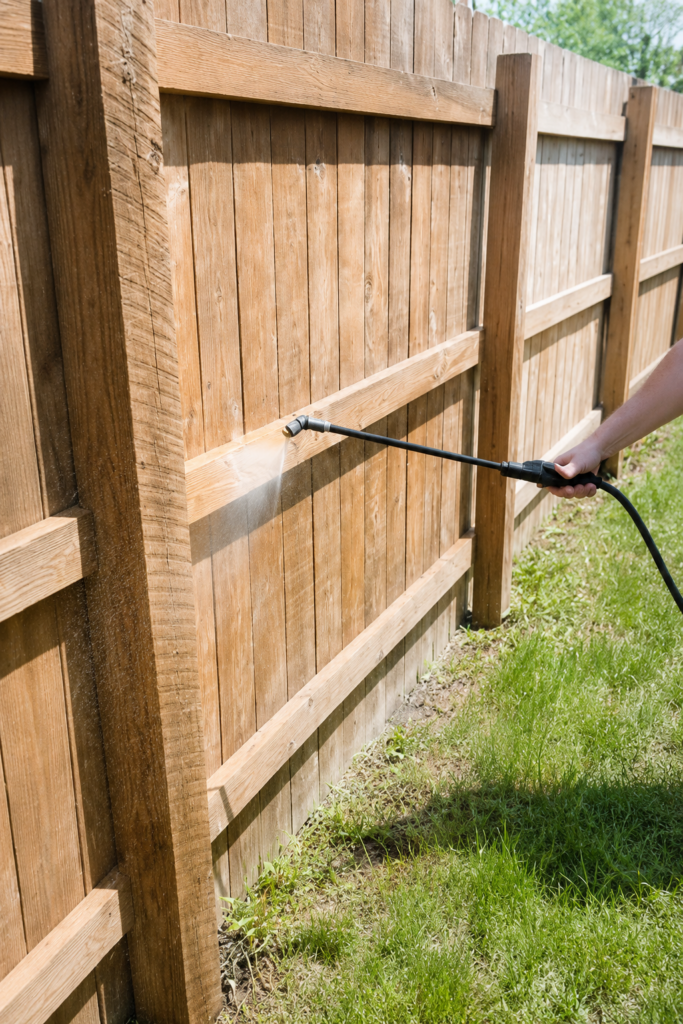
- Wash the fence. We use pressure washing to strip off dirt, mildew, and old flaking paint. This step changes how well the next coat sticks.
- Let it dry fully. Wood needs to breathe out that moisture before anything else happens. Rush this and you’ll trap water under your new coat.
- Inspect and repair. We check every board and post for splits, loose nails, or soft spots. Bad boards get flagged before we move forward.
- Sand rough or peeling areas. Smooth transitions matter more than people think. They keep new paint from bridging over old damage.
- Spot prime bare wood. Raw wood soaks up stain unevenly without it, and you end up with blotchy patches.
- Apply stain or paint. We use products from Sherwin Williams, PPG, and Benjamin Moore, chosen based on your wood type and how much sun that fence gets.
- Check the finish once it’s dry. We walk the full fence line looking for missed spots, drips, or thin coverage before calling it done.
Sounds like a lot for a fence, right? But this is exactly why some jobs last years and others peel by next summer.
Gwinnett County summers bring heavy humidity. That moisture works its way into unsealed wood fast. So drying time between steps isn’t optional. It’s the difference between a coat that holds and one that bubbles by August. We won’t rush a step just to finish faster.
Timing a Fence Refinish for Georgia's Seasons
Timing matters almost as much as the stain you pick. Gwinnett County gets thick pollen coverage every spring, usually late March into April. It settles into wood grain fast. Paint or stain over that layer and you’re sealing pollen right under the finish. That’s not good. Summer brings its own problem. Georgia humidity sits high most afternoons. Sudden pop-up thunderstorms are normal from June through August. Stain needs dry wood and a dry forecast window to cure right, usually 24 to 48 hours without rain. Chase a summer storm cell around your yard and you’ll lose the whole day, sometimes the whole finish.
Fall is our favorite stretch for this work. September through November usually gives Lawrenceville steady dry days, lower humidity, and mild temps. These conditions let stain soak in and cure evenly. We book a lot of fence jobs this time of year for that reason. Winter isn’t off the table, but cold snaps below 50 degrees slow curing way down. Some products won’t bond right at all. Check the can; most stains list a minimum application temperature for a reason.
- Spring: wait until after peak pollen drop, usually early May
- Summer: plan around storm forecasts, allow extra dry time
- Fall: ideal window, low humidity and mild temps
- Winter: possible on mild days, but check the product’s minimum temperature
So if someone tells you fence staining is a one-season job, they’re skipping half the story.
Frequently Asked Questions
Stain works best for cedar and pressure treated pine, the two woods we see most on fences around Gwinnett County. It soaks into the grain and lets wood expand and contract through our humid summers and January cold snaps without peeling. Paint forms a harder shell on top and hides old repairs well, but it can trap moisture if the wood isn’t fully dry first. We check your wood type and sun exposure before recommending either one.
Most Lawrenceville fences need attention every two to three years, sooner if they face full afternoon sun. Our humid summers and heavy rain make wood swell and shrink constantly, which cracks old finishes faster than in drier climates. West facing fences fade quicker and often need a UV resistant stain. If your fence is under two years old and still looks tight, you may only need a wash instead of a full refinish.
A few things drive cost: how much prep the wood needs, whether boards require repair or replacement, the size of your fence, and whether you choose paint or stain. Fences with rot, heavy peeling, or sun damage take more labor than a fence that just needs a fresh coat. We look at all of this on site before quoting anything. Call us for a free estimate and we’ll walk your fence line with you.
Yes, washing your fence first is one of the most important steps in the whole job. Pressure washing strips off dirt, mildew, and old flaking paint so the new coat can bond to the wood. Skipping this step means you’re just hiding problems for a season or two. After washing, the wood needs to dry out fully before any stain or paint goes on, or you risk trapping moisture underneath.