
Signs Your Walls and Ceilings Need a Fresh Coat

Most people don’t call us until something catches their eye. Maybe it’s a scuff by the light switch that won’t wipe off anymore, or a ceiling corner that’s gone a little yellow near the HVAC vent. That’s usually the tipping point.
Here's what we look for when we walk through a Lawrenceville home for an interior painting estimate:
- Chalky or dusty residue on the walls when you brush against them, that’s the paint breaking down
- Hairline cracks around door frames and ceiling corners, common in homes with slab foundations settling over time
- Yellowing on ceilings near kitchens or bathrooms, usually grease or humidity buildup
- Fading on walls that catch afternoon sun, especially in rooms with west facing windows
- Nail pops or small drywall dings from moving furniture or hanging pictures
Often it’s a combination of a few of these. A room might look fine from the doorway. Step closer and you’ll see the flat spots where old touch up paint doesn’t match the sheen anymore. Older homes around Lawrenceville, especially ones built in the 80s and 90s, often still have oil based trim paint underneath layers of latex. That mismatch shows up as cracking or peeling right at the baseboards. We see this constantly.
And then there’s the smell test. If a room still smells musty after you’ve cleaned it, that can mean moisture got into the wall board at some point, and paint alone won’t fix it. Not sure if what you’re seeing is cosmetic or something deeper? That’s a fair question, and it’s exactly what a walkthrough is for. Schedule an interior painting walkthrough
What a Professional Interior Painting Job Includes
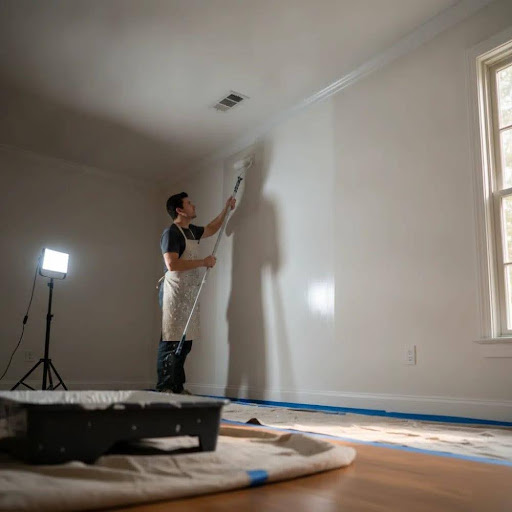
A lot of homeowners think interior painting means rolling color on a wall. That’s maybe 30% of the job. The rest is prep, and prep is what separates a paint job that looks great for a week from one that looks great for years.
Here’s what our team does on a typical interior job:
- Walk the space and check every wall, ceiling, and trim piece for cracks, nail pops, or old water stains.
- Move or cover furniture, floors, and fixtures. Nothing gets splattered.
- Fill holes, sand rough patches, and caulk gaps where trim meets wall.
- Wash down greasy spots, usually kitchens and bathrooms, so paint sticks.
- Prime bare drywall or repaired areas so the topcoat goes on even.
- Cut in edges by hand, then roll the field coats.
- Do a final walkthrough with you before we call it done.
Skip step three or four and you’ll see it later, usually within a season. Paint doesn’t hide a bad wall, it shows it. We’ve walked into plenty of homes where a previous paint job started peeling in bathrooms because nobody washed the walls first or used the right primer for humidity. Products matter too. We work with Sherwin Williams, PPG, and Benjamin Moore, and the sheen you pick changes how forgiving the wall is. Eggshell hides small flaws better than satin. Semi-gloss on trim wipes clean but shows every imperfection underneath, so that surface has to be close to perfect before paint ever touches it. Drywall repair, when it’s needed, isn’t a separate contractor’s job for us. It’s part of the same visit, same crew, same day if the repair’s small. See our full interior painting process
When You Can Skip a Full Repaint
Not every room needs the works. We say this a lot: a fresh coat isn’t always the fix. Sometimes what you’re looking at is a cleaning problem, not a paint problem.
If your walls look dull but there’s no cracking, no peeling, and the color still fits the room, a good scrub with a mild cleaner might be all you need. Kitchens near Lawrenceville’s older subdivisions off Highway 29 often just have grease film and cooking residue built up near the stove and vent hood. That’s not a paint failure. That’s just life happening on a wall.
Small nail holes, a scuff by the light switch, a scratch from moving furniture – these don’t need a repaint either. A dab of touch-up paint, if you kept the can or know the sheen, handles it in five minutes. Full repaints make sense when damage covers a wide area, when color runs uneven room to room, or when you’re prepping a home to sell and need everything to match.
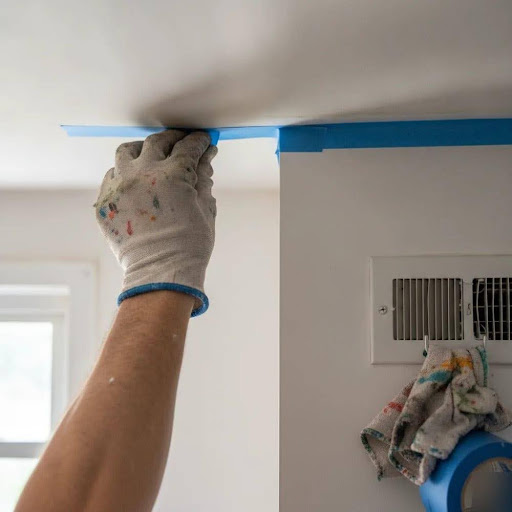
Here’s a question worth asking yourself. Is the paint failing, or are you just tired of the color? Those are two different jobs with two different price points, and knowing which one you’re in saves you money. We’ll tell you straight if a spot-touch-up or a partial refresh gets the job done. Homeowners often call us thinking they need a full interior repaint when really one accent wall or a ceiling refresh solves it. We’d rather give you the honest answer than sell you more than you need. Ask us if you need a full repaint or a touch-up
Prepping Older and Newer Gwinnett County Homes
Walk into a house built off Old Norcross Road in the 1970s and the walls tell you a different story than a place built last year near Sugarloaf Parkway. Older Lawrenceville homes often have plaster or heavily-textured walls with decades of paint layers stacked on top. Newer builds usually have drywall with a thin builder-grade coat that was never meant to last. Both need real prep.
In the older homes, we’re checking for cracked plaster, loose caulk lines, and nail pops that show up after years of settling. Gwinnett’s clay soil shifts with our wet springs and dry summers. That movement works its way into drywall seams and trim joints over time. Skip that step and your fresh paint job will show every crack within a year. Newer construction brings its own headaches. Builder-grade paint is thin, flat, and doesn’t hold up to scrubbing or sunlight. It looks fine at closing, then fades or scuffs fast. We’re sanding glossy trim so primer grabs, filling nail holes from picture frames and old furniture arrangements, and taping off any spots where drywall tape is starting to peek through at the seams.
Here’s the thing nobody tells you until it’s too late – painting over unprepped walls just hides the problem for a few months. It doesn’t fix it. So whether your place went up during Lawrenceville’s growth boom near Collins Hill or it’s an older ranch house closer to downtown, the prep work is what separates a paint job that looks good at the walk-through from one that still looks good two years later. We spend more time here than most folks expect. That’s on purpose. Get a prep-focused estimate for your home
How Interior Painting Pricing Works
Here’s how the money side works, because most homeowners have no idea what they’re really paying for.
Interior painting isn’t priced by the gallon. It’s priced by the hour, the prep work, and the condition of what’s already on your walls. A contractor quoting you a number is really quoting labor time, paint quantity, and how much repair work the surface needs before a brush ever touches it. Square footage matters, sure, but it’s not the whole story.
Here’s what moves a quote up or down:
- Ceiling height and trim detail. Two-story foyers and crown molding take longer than a flat bedroom wall.
- Wall condition. Nail holes, drywall cracks, or old wallpaper glue mean prep hours before paint goes on.
- Number of colors and coats. Dark-to-light color changes almost always need an extra coat.
- Furniture and floor protection. Occupied homes take longer to work around than an empty one.
- Paint grade. Premium lines from Sherwin Williams, PPG, or Benjamin Moore cost more per gallon but cover better and last longer.
Older homes around Lawrenceville, especially places built decades ago, often have plaster patches or old oil-based trim that needs a bonding primer before new paint sticks. That’s extra labor most quotes won’t mention unless you ask. So what should you ask before you hire anyone? Ask if the quote includes surface prep, priming, and how many coats. Ask if furniture moving and floor protection are included. Ask what happens if they find damage once they start – do you get a change order or a surprise invoice later. A contractor who walks your rooms and explains their number line by line is worth more than one who quotes over the phone. Request a detailed, line-by-line quote
Frequently Asked Questions
Most interior painting jobs take one to three days, depending on the number of rooms and how much prep work is needed. A single room with clean walls might only take a day. A whole-house repaint with cracks to fill, trim to sand, and multiple coats can stretch to a few days. Homes with plaster walls or heavy texture, common in older Lawrenceville neighborhoods, usually add extra prep time. We’ll give you a realistic timeline during your walkthrough so you know what to expect before we start.
During a walkthrough, we check every wall, ceiling, and trim piece for cracks, nail pops, and old water stains. We look for the same signs that bring most homeowners to us in the first place, things like chalky residue, yellowing near kitchens, or cracking at baseboards. We’ll also ask what’s bothering you about the space and whether a full repaint or a smaller touch-up makes more sense. You’ll walk away with a clear plan, not just a number.
Walls crack after painting when the prep work skips filling and sanding, not because of bad paint. Gwinnett County’s clay soil shifts with wet springs and dry summers, and that movement works into drywall seams and trim joints in homes built decades ago, especially those with slab foundations. If those cracks aren’t filled and caulked before the topcoat goes on, they’ll show up again within a year. That’s why we check every corner and joint before rolling any color.
You only need a full repaint if damage covers a wide area, colors don’t match room to room, or you’re prepping a home to sell. If your walls just look dull with no cracking or peeling, a good scrub often solves it. Small scuffs and nail holes usually just need a dab of matching touch-up paint. We’ll always tell you which situation you’re in, because a partial refresh and a full repaint are two very different jobs.
Eggshell works best on most walls because it hides small flaws better than shinier finishes. Semi-gloss on trim wipes clean easily, but it shows every imperfection underneath, so that surface needs to be nearly perfect before we paint it. Kitchens and bathrooms often need a sheen that stands up to grease and humidity, especially in older homes where moisture buildup is common. We’ll walk you through which sheen fits each room based on how it’s used.
We move or cover every piece of furniture, floor, and fixture before any prep work starts. Nothing gets splattered because covering the space happens before we fill holes, sand trim, or wash down walls. This step matters even more in kitchens and bathrooms, where washing greasy surfaces is part of getting paint to stick. We treat your home like we’d want ours treated, and we do a final walkthrough with you before calling the job done.