Popcorn Ceiling Removal in Lawrenceville

Beautifying residential and commercial establishments since 1984

Signs Your Lawrenceville Home Needs Popcorn Ceiling Removal

Popcorn ceilings show their age through yellowing, sagging, or crumbling texture, especially in homes built before the 1990s. Gwinnett County’s humid summers can make the texture flake or stain sooner than expected.

If your ceiling has a bumpy, spray-on texture and the house was built before the early 1990s, it is probably popcorn. Homes from the ’70s and ’80s near downtown have been through decades of humidity swings, and that moisture works into the ceiling over time, softening the texture, dulling the color, and pulling it away from the drywall in spots.

  • Yellow or tan staining, even in rooms with no water damage
  • Texture that feels soft or crumbles at a light touch
  • Visible sagging or dipping in the ceiling plane
  • Cracks running through the texture near light fixtures or vents
  • A musty smell after heavy rain, a possible sign of trapped moisture

Not every dated ceiling is a problem. Plenty of homeowners simply want a flat finish for resale or a remodel, and that is a style choice. Sagging or staining is different — it means something is happening behind the texture, and it is worth checking before you paint over it or leave it another season.

Gloved hands in a protective suit scrape peeling beige wall texture, collecting debris in a plastic bag with a small tool on a ceiling or wall surface.

Asbestos Testing Comes Before Any Scraping Begins

If your home was built before the early 1990s, the popcorn texture may contain asbestos. Some spray textures used in Gwinnett County homes during the ’70s and ’80s had asbestos fibers mixed in, and dry-scraping without testing sends those fibers airborne. Once they are airborne, you cannot call them back.

So we test before touching anything. A small sample goes to a lab, and results usually come back within a few business days. If it comes back clear, we move into prep and removal. If it does not, the approach changes: different containment and handling, and sometimes a licensed abatement contractor has to step in first.

This is not a step added to pad the job, and it is not one we skip because somebody’s cousin scraped a ceiling one afternoon without a problem. The one time it is not fine is exactly why the test exists.

When a Small DIY Test Patch Makes More Sense

One small water stain on a closet ceiling probably does not need us. If the popcorn was applied after 1980, a homeowner can mist the area, scrape gently with a wide putty knife, feather in drywall mud, and match the texture with canned spray texture from the hardware store. It is slow and messy, but for a two-by-two-foot spot it is a Saturday afternoon.

It stops making sense at scale. A full room, ceilings older than 1980 where asbestos testing matters, or texture cracking and pulling away in sheets all change the math. You need the right sprayer, enough compound, and the skill to get a smooth ceiling with no visible seams under lamp light.

Then there is the mess. A single patch means one drop cloth. A whole ceiling means plastic sheeting on every wall, floor protection, and a shop vac running for hours. Homes built in the ’80s and ’90s off Sugarloaf Parkway often have popcorn texture throughout the main level, so what looks small from the doorway grows once you are on the ladder.

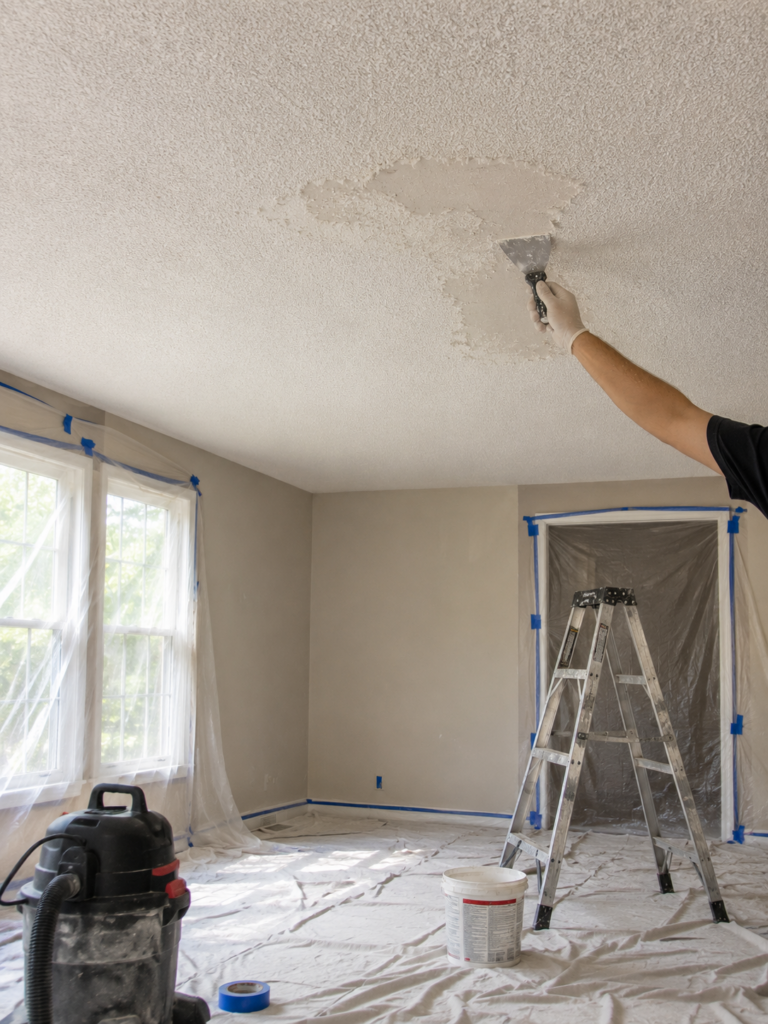
Person smoothing plaster onto a textured ceiling with a putty knife during a room renovation.
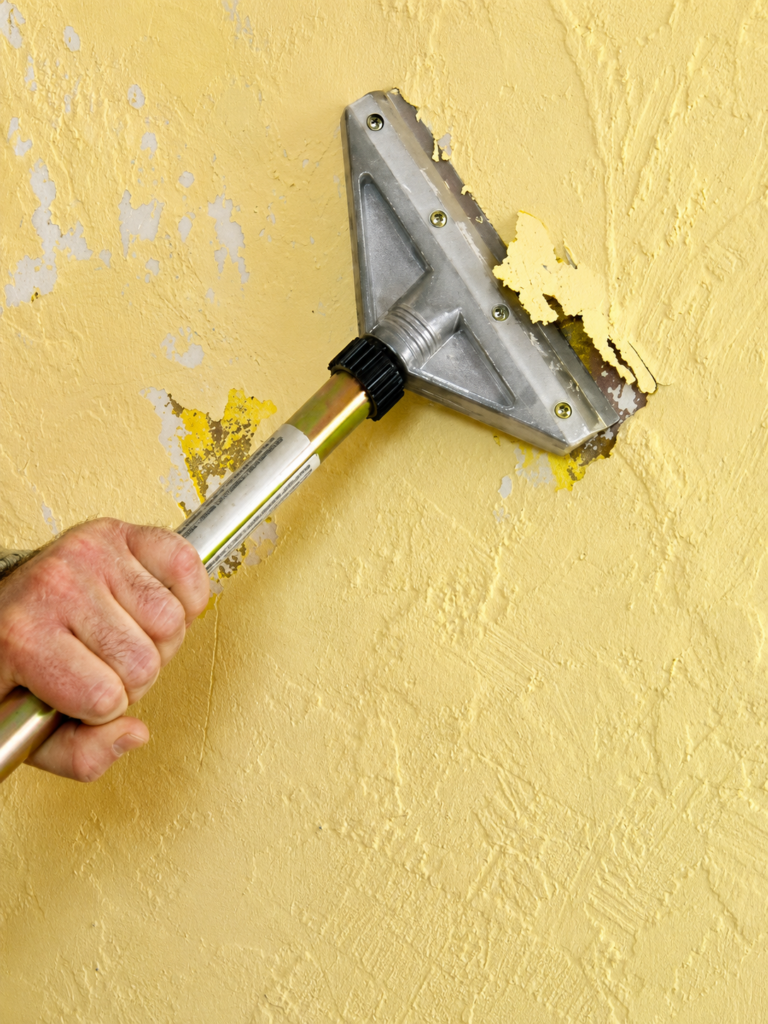
Person uses a triangular metal scraper to remove yellow paint from a textured wall, hand gripping a long handle.

What Happens During Removal, Skim Coating, and Priming

Popcorn texture does not come off with a quick scrape. It takes water, patience, and the right sequence.

  • Test a small area first. Older ceilings may have asbestos in the texture, so this is not optional.
  • Wet the ceiling in sections with a garden sprayer so the texture scrapes off clean instead of scattering chalky debris.
  • Take the softened popcorn down to the drywall with a wide putty knife, working section by section.
  • Skim coat with joint compound to smooth uneven spots, nail pops, and rough patches left by scraping.
  • Sand smooth once the compound dries. This step separates a flat ceiling from a lumpy one.
  • Prime with a sealer made for ceilings so the paint has an even base to grip.

That priming step matters more than people expect. Rush it and the paint soaks in unevenly, showing flat spots and streaks when sunlight hits the ceiling. We use low-VOC products throughout, so the house is not sitting in fumes for days while compound and primer dry.

How Popcorn Ceiling Removal Is Typically Priced

Most contractors price by the square foot rather than a flat rate, which makes sense — a small hallway ceiling and a whole downstairs great room are not the same job.

  • Ceiling height, since taller rooms need scaffolding or a lift instead of a ladder
  • Whether asbestos testing is required before any scraping starts
  • How much furniture and flooring needs protection or has to be moved
  • Water damage or soft spots underneath that need drywall repair first
  • Square footage, and how many rooms get done in one visit

That last point matters more than people expect. Three bedrooms in one visit almost always costs less per square foot than one room now and another next month.

Quotes are also hard to compare when one includes the skim coat and primer and the other does not. Ask whether the price covers priming and painting after the texture comes off, who handles drywall repair if there is damage underneath, how floors and vents get protected during scraping, and whether cleanup and debris haul-away are included. A quote that skips those details often turns into a mid-project phone call asking for more money.

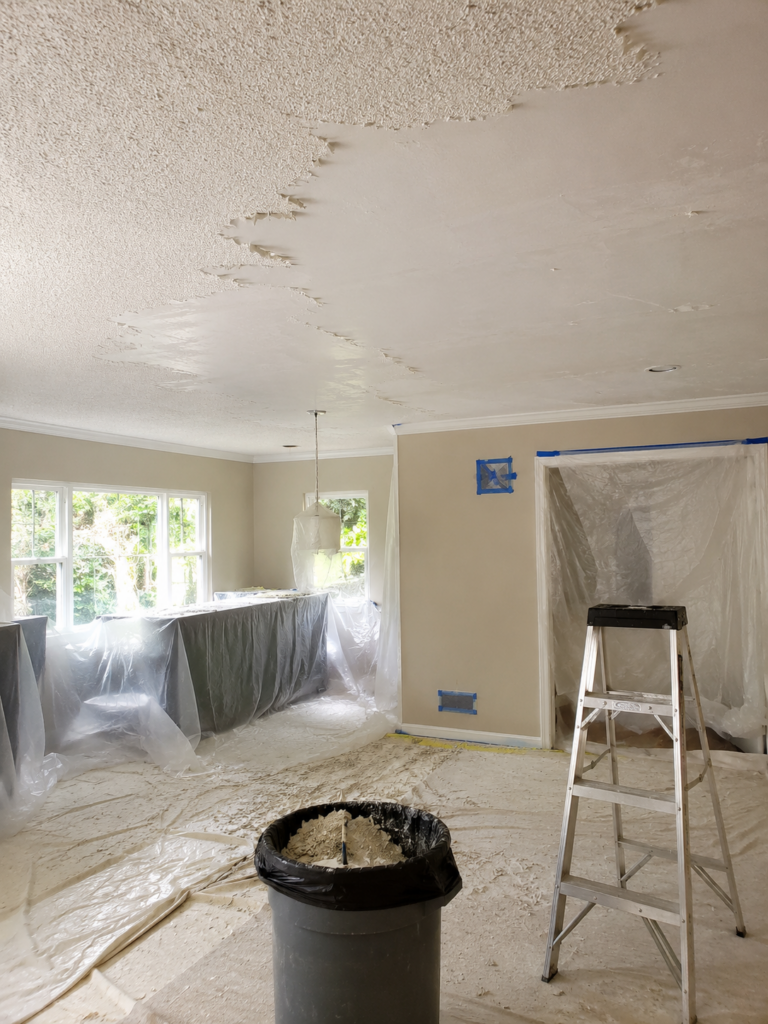
Room under renovation with plastic coverings over countertops and windows, a ladder, and a bucket of plaster on the floor.

Frequently Asked Questions

Most single rooms take one to two days once testing is done, including wetting and scraping, skim coating, sanding, and priming. A full main level takes longer, since several rooms often share the same original texture, and drying time between skim coat and primer adds to the schedule.

We start by protecting your home, not by scraping. Plastic sheeting goes on the walls and floor, furniture gets moved or covered, and we pull a texture sample for testing first. Once that is clear, we wet the ceiling in sections and scrape it down to bare drywall.

Yes. If your home was built before the early 1990s, the texture may contain asbestos fibers, which is common in homes from the ’70s and ’80s. Skipping the test risks sending those fibers into the air, so we always test before any scraping begins.

If it is a small spot and your home was built after 1980, yes. A water-stained patch about two feet square is doable with a spray bottle, a putty knife, and some patience. Full rooms or pre-1990 ceilings are a different story.

Less than most homeowners expect, but it takes real containment. We hang plastic sheeting on every wall and cover the floors before any wetting or scraping, and wetting the ceiling first keeps chalky debris from scattering. A full ceiling means a room sealed off for a day or two.

Ready to Get Started?

Call (770) 513-4470 now for a free estimate.